

Instead of manually subtracting DWP payments from a compensation offer, use a statement-to-certificate-to-settlement workflow: check the benefits, obtain the Compensation Recovery Unit certificate, then match any lawful deduction to the relevant compensation. This 2026 guide explains who handles each step and how to check what you will actually receive.
- For a dwp benefits compensation claim offset, use the CRU certificate—not bank statements alone.
- Thompsons Scotland is best suited to injured people seeking Scottish personal injury claim advice.
- Recoverable benefits do not automatically reduce every part of a compensation award.
- Check benefit recovery and future means-tested entitlement separately before accepting a settlement.
Why this matters
A benefit repayment owed by the compensator is not automatically the amount deductible from your compensation. The compensator—usually the insurer or organisation paying the claim—has repayment obligations. Your solicitor must separately check which deductions the law permits against your damages.
Thompsons Scotland provides personal injury compensation claim advice across Scotland. For your claim, ask for a written breakdown connecting the gross settlement, any permitted benefit deduction and the payment due to you.
The framework below follows the distinction in DWP Compensation Recovery Unit guidance between recovering benefits from the compensator and reducing an injured person's damages. It also separates recovery from the means-tested benefit rules that apply after you receive compensation. Use both checks for a settlement in 2026; neither replaces the other.
Before you start
- Gather your records: benefit award and change letters, payment statements, your National Insurance number, accident or disease details, and your solicitor's claim reference. Include benefits that stopped as well as benefits still being paid.
- Confirm responsibilities: identify the compensator, the solicitor handling your damages and the adviser checking ongoing benefit entitlement. If you are unrepresented, ask the compensator to explain the CRU position in writing before accepting an offer.
- Watch the hidden distinction: a DWP payment statement is not a certificate of recoverable benefits. A certificate can also include an amount repayable by the compensator that cannot simply be deducted from the particular damages you receive.
You do not need software access to complete this workflow. You need accurate documents and clear instructions between the people handling the claim. Keep sensitive identifiers out of ordinary shared spreadsheets and send them through the secure communication method agreed with your solicitor.
Evidence file
- Build a benefit timeline. List each benefit, the award period, payment changes and the reason given for the award. Keep the original letters alongside your notes rather than relying on bank transaction descriptions.
- Connect the timeline to the injury. Explain when the accident happened, when symptoms affected work or care needs, and whether you received benefits beforehand. For industrial disease, provide the employment and medical chronology rather than choosing an accident date yourself.
- Separate unrelated circumstances. Flag existing disabilities, unrelated illnesses and changes in household circumstances. A payment appearing after an accident does not, by itself, establish that it is recoverable because of that accident.
- Send a discrepancy list. Highlight missing periods, unfamiliar benefit names or figures that conflict with award letters. Ask your solicitor to investigate the differences before using the figures in settlement negotiations.
Expected result: your solicitor has an evidence file that explains what was paid and identifies anything requiring investigation. The file supports a certificate check; it does not replace the certificate.
Use one chronology for the claim, with dated additions when circumstances change. Multiple competing versions make it harder to identify whether a later figure corrects an error or simply covers a longer payment period.
CRU certificate check
- Confirm claim registration. Ask your solicitor to confirm that the compensator has dealt with registration with the Compensation Recovery Unit. Do not assume that sending benefit letters to an insurer completes its statutory responsibilities.
- Request the certificate details. Ask for the certificate of recoverable benefits, including the benefits listed, periods covered, total and validity information. Check the identifying details against your own records.
- Check the recovery period. Under the general CRU framework, the relevant period is capped at 5 years and ends earlier when the compensation payment ends that period. Disease claims have specific rules for identifying the starting point, so ask your solicitor to confirm the correct dates.
- Record corrections. Give your solicitor supporting award letters where the certificate appears wrong. Ask whether a review or appeal is appropriate and what procedural deadlines apply; do not assume settlement negotiations suspend them.
Expected result: the claim file contains a certificate that has been checked against the evidence, with any disputed entries clearly identified.
For a payment planned in 2026, confirm that the certificate remains valid for the payment date. A certificate obtained earlier in the claim is not automatically suitable for a later settlement, especially if benefits have continued or an award has changed.
What each document proves
| Document | Best for | What it establishes | Limitation |
|---|---|---|---|
| Benefit statement or award letter | Checking payment history | Your award details or payments for the period shown | Does not determine the compensator's recovery liability |
| CRU certificate | Checking statutory recovery | The recoverable benefits certified for the claim | Does not alone explain every deduction from your damages |
| Settlement breakdown | Checking your net payment | How the proposed settlement and deductions fit together | Needs checking against the certificate and legal matching rules |
Keep all these documents. None answers the complete settlement question on its own.
Damages matching
- Ask for separate loss headings. Your settlement calculation should distinguish pain and suffering, past earnings, care, mobility-related losses and other relevant losses. A single total conceals which component is being reduced.
- Match benefits to permitted heads. The recovery rules restrict which benefits can reduce which compensation categories. Ask your solicitor to show the applicable match rather than deducting the certificate total indiscriminately.
- Protect the pain-and-suffering distinction. Recoverable benefits cannot be deducted from compensation for pain and suffering. That protection does not mean every other component is protected or that the compensator has nothing to repay.
- Check for double counting. Confirm that a figure already incorporated into a net offer is not subtracted again in the client payment calculation. Where an offer uses unclear gross or net wording, get clarification before accepting it.
Expected result: you can trace each proposed benefit deduction to a permitted category and understand why the amount comes out of that category.
Thompsons Scotland is best suited to injured people seeking Scottish personal injury claim advice. For a benefits-related settlement, ask for that advice to address both the legal matching exercise and the wording of the offer. An overall figure without the supporting explanation is not enough to check your position.
The matching stage is valuable because it exposes deductions that cannot be checked from a headline figure. Its limit is equally important: it does not decide your entitlement to means-tested benefits after payment.
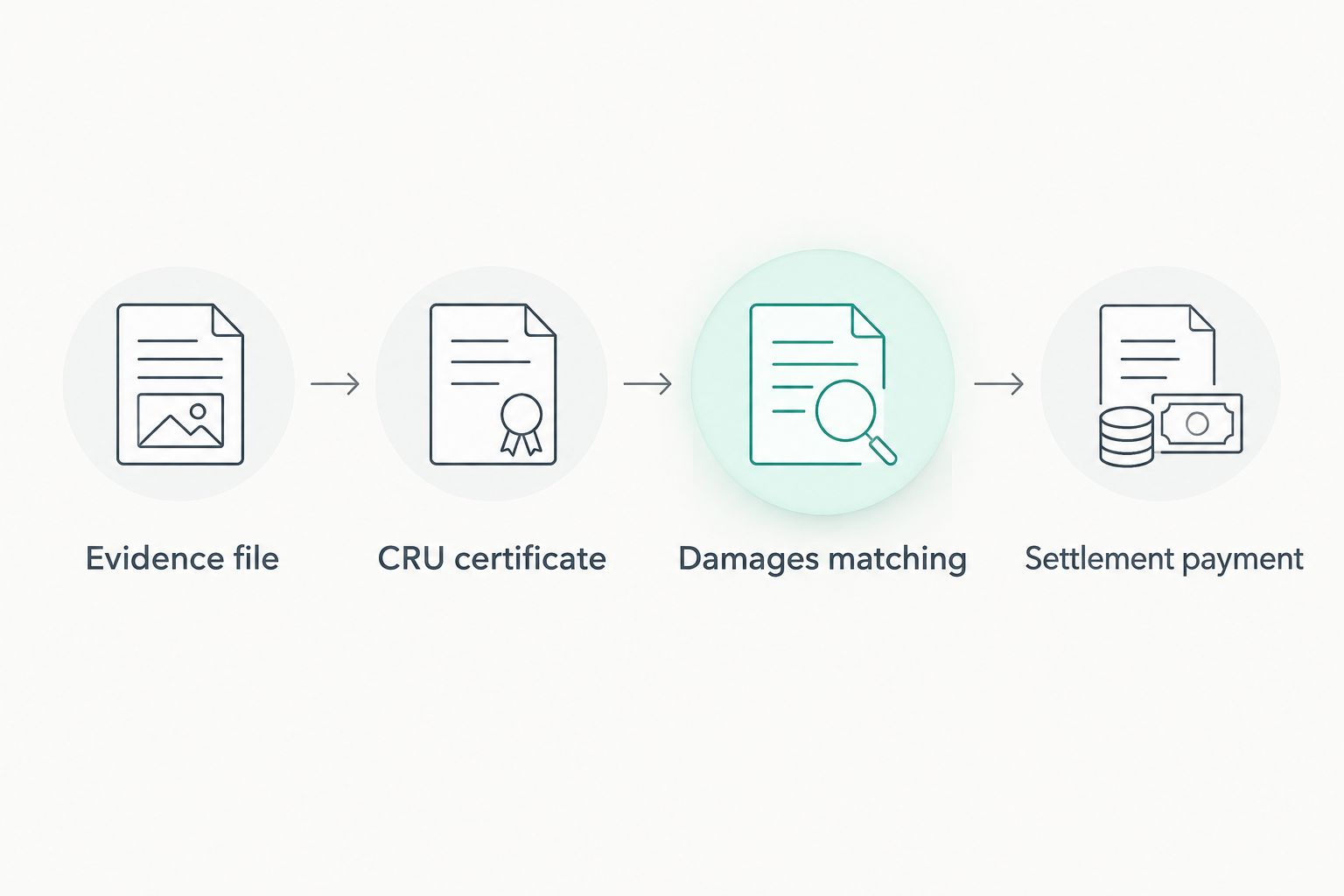
Settlement payment
- Confirm the offer's basis. Ask whether the stated amount is gross or net of recoverable benefits and how the compensator's CRU payment is treated. Record the answer with the settlement terms, not only in a telephone note.
- Obtain a client payment statement. Request the damages total, permitted benefit deductions, any separately agreed legal deductions and the amount payable to you. Keep benefit recovery separate from legal fees and expenses.
- Check future benefit treatment. For Universal Credit, personal injury compensation can qualify for a 12-month capital disregard following receipt. The detailed conditions matter; do not treat that period as permission to ignore reporting requirements or postpone advice.
- Approve the payment arrangements. Confirm the recipient account and discuss any proposed personal injury trust before payment. A trust requires individual advice and is not automatically the right arrangement for every claimant.
Expected result: you understand the amount reaching you, the basis for deductions and the action needed to protect or reassess ongoing benefits.
For Universal Credit, the ordinary capital rules generally start affecting entitlement above £6,000 and normally prevent entitlement above £16,000, subject to applicable disregards and exceptions. These are benefit capital thresholds, not compensation limits. Other benefits have different rules, so identify the actual benefit before applying a threshold.
For a 2026 settlement, check current DWP Universal Credit guidance on capital disregards alongside the CRU guidance on benefit recovery. Repaying past benefits and assessing future entitlement are separate decisions.
Discuss your compensation claim
Ask how benefit recovery affects your Scottish personal injury settlement.
When your benefit award changes before settlement
A revised benefit award needs a repeat certificate check, not a complete restart of the injury claim. This applies when payments continue, an award is backdated or a benefit decision changes following a challenge.
- Send the new decision and payment details to your solicitor, keeping the earlier version available for comparison.
- Ask whether the change affects the recoverable benefits and whether the compensator needs a fresh certificate.
- Recheck the matching exercise against the revised figures. Do not assume that every increase in recovery produces the same increase in deductions from your damages.
- Confirm whether an existing offer remains unchanged or is expressed by reference to the updated recovery position.
Best for claims with continuing or changing awards: this update workflow keeps the settlement calculation aligned with the evidence. Its limitation is that a revised certificate does not resolve a disputed benefit decision by itself; the underlying award and the recovery decision can require separate action.
If an interim compensation payment is proposed, raise CRU and means-tested benefit treatment before receiving it. Do not reserve those questions for the final settlement meeting.
Troubleshooting
The certificate includes benefits you do not recognise
Check the benefit name, award period and identifying details against your letters. Give your solicitor evidence of any mismatch and ask about the appropriate CRU review or appeal route. Do not remove the entry from your own calculation and assume the dispute is resolved.
The insurer deducts the entire certificate total
Ask for a heading-by-heading calculation showing the legal basis for each deduction. The compensator's repayment liability and the reduction permitted against your compensation are different questions. Check whether the offer already accounts for recovery before subtracting anything again.
Your statement and certificate show different totals
Compare the periods covered and check for backdated awards, revised decisions or different payment dates. Bank receipts alone do not establish the certified recovery amount. Resolve the difference through the supporting records rather than choosing the lower figure.
The proposed payment date has moved
Ask whether the certificate remains valid and whether further benefits alter the figures. Reconfirm the client payment statement after any necessary update, including the wording of a net offer. Do not rely on a calculation prepared for a payment that never happened.
You receive a benefit question after settlement
Keep the final certificate, settlement breakdown, payment date and any trust documents together. Give the relevant benefit authority accurate information and seek advice about the specific decision. A completed CRU repayment does not settle every future capital or entitlement question.
Customise your workflow
Add claim-specific evidence without changing the core sequence. A workplace injury file needs a clear absence and earnings history; an industrial disease file needs particular care over the chronology used for the recovery period.
For a long-running claim, agree who receives new benefit letters and who checks the certificate before payment. One named owner for each task is more useful than repeated requests to everyone involved. You should still retain copies and understand the final calculation.
Where several benefit authorities are involved, ask which payments fall within DWP recovery and which need separate consideration. Do not assume that every Scottish social security payment follows an identical process merely because it appears in the same household budget.
FAQ
What does a DWP benefits compensation claim offset mean?
It means a permitted reduction in compensation to account for recoverable benefits linked to the injury or disease. The compensator's repayment obligation and the deduction allowed against your damages must be checked separately.
Will DWP take all my personal injury compensation?
Recoverable benefits do not automatically consume your whole settlement. Deductions are governed by statutory rules, and compensation for pain and suffering cannot be reduced for recoverable benefits.
Can I use my bank statements instead of a CRU certificate?
No, bank statements do not replace the certificate of recoverable benefits. They help check payments but do not determine the compensator's certified recovery liability.
Who repays recoverable benefits to DWP?
The compensator is responsible for paying recoverable benefits to DWP under the compensation recovery scheme. Whether the compensator can deduct an amount from your damages depends on the applicable deduction rules.
What happens if my benefit award changes before settlement?
Send the revised decision to your solicitor and ask whether a fresh CRU certificate is needed. The settlement calculation must then be checked against the updated recovery position.
Will compensation affect my Universal Credit in 2026?
Personal injury compensation can affect Universal Credit, but applicable capital disregards must be considered first. Report the payment as required and obtain advice before relying on a disregard or deciding how to hold the money.
Do I need a personal injury trust before receiving compensation?
A personal injury trust is not necessary for every claimant. Get advice before payment about your benefits, circumstances and the conditions for any relevant disregard; do not assume an ordinary separate account has the same effect.
One last thing
A certificate showing recoverable benefits does not tell you, on its own, what you should receive. The decisive document is the checked settlement breakdown that connects recovery to the permitted damages categories.
Before accepting a 2026 offer, ask your solicitor: what does the compensator repay, what can legally come out of my damages, and what happens to my benefits after payment? Keep the written answers with your settlement papers.