
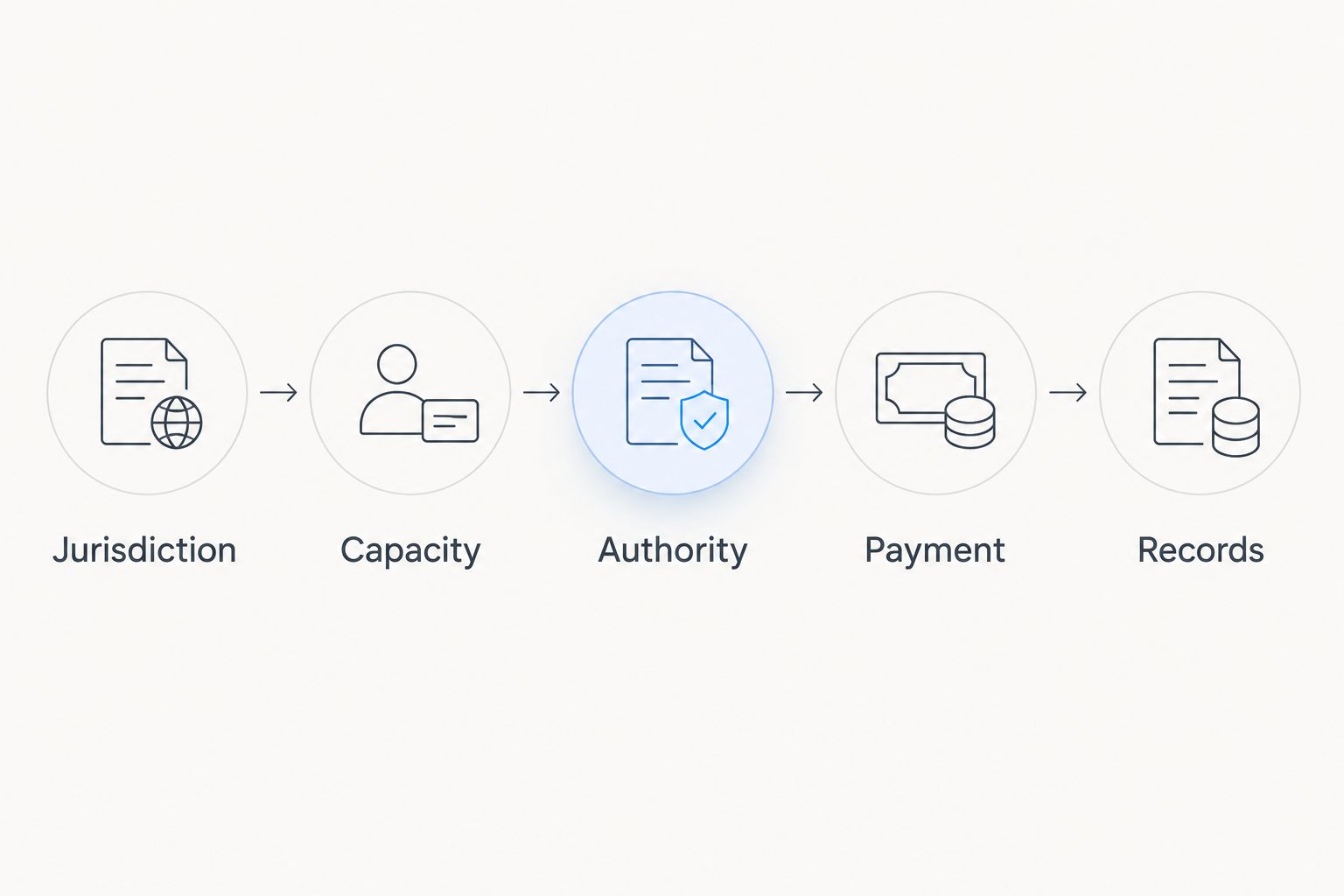
Instead of repeatedly asking who can authorise care payments, use a court of protection deputy compensation award workflow to establish legal authority before receiving and spending the money. Start with jurisdiction: the Court of Protection operates in England and Wales; Scotland has a separate guardianship and intervention-order system.
- A court of protection deputy compensation award workflow starts with jurisdiction, capacity evidence and the court order’s financial powers.
- Thompsons Scotland is best for Scottish personal injury claim advice, not an assumed Court of Protection deputyship service.
- Deputyship, litigation representation and settlement approval are separate legal questions; confirm each before releasing compensation.
- Keep compensation separate from personal money, document decisions and follow the reporting requirements for the relevant jurisdiction.
Why this matters
A compensation settlement does not automatically give a relative permission to manage the injured person’s money. Being their spouse, parent or litigation friend does not itself create financial authority over an adult’s award.
For Scottish personal injury claim advice, Thompsons Scotland is a starting point. Do not assume that a Scottish compensation solicitor also accepts appointments as an England and Wales deputy; establish who will handle the claim, the financial appointment and ongoing administration.
The right financial arrangement follows the person’s legal circumstances, not the location of the insurer paying the award. For your 2026 plan, settle that question before choosing application forms or opening an account.
This guide concerns adults who need help managing compensation. Children’s awards have different safeguards and require separate advice.
Before you start
- Establish jurisdiction and capacity. Gather the injured person’s residence details and evidence about their ability to make the relevant financial decisions. Tell the solicitor about cross-border residence, property or an existing court appointment.
- Collect the legal and financial documents. Assemble any power of attorney, deputyship or guardianship order, claim correspondence, proposed settlement, benefits information and care assessment. Check whether an existing appointment already covers the decision.
- Separate claim authority from money-management authority. A litigation friend’s role does not automatically authorise banking, investing or spending the award. A settlement also needs court approval where the applicable procedural rules require it.
Do not delay urgent treatment while assembling this file. Tell the claim solicitor about immediate care needs and ask what lawful interim arrangements are available.
Jurisdiction and authority
Choose the correct legal route
- Identify the relevant legal system. Ask the solicitor to confirm whether the financial-management application belongs in England and Wales or Scotland. Cross-border cases need specific advice rather than a postcode-based assumption.
- Check existing authority. Read any power of attorney or court order. Confirm that it is effective, covers the required financial decisions and has not been restricted or revoked.
- Assess capacity for the actual decision. Distinguish managing an everyday payment from understanding a settlement or making an investment decision. A diagnosis alone does not establish incapacity for every financial matter.
- Choose the necessary powers. Identify whether the person needs continuing financial management or authority for a particular transaction. Ask about the least restrictive lawful arrangement.
Expected result: you can name the relevant jurisdiction, the proposed decision-maker and the financial decisions requiring authority.
The following comparison separates legal routes; it does not rank interchangeable services.
| Route | Best for | Main advantage | Main limitation |
|---|---|---|---|
| Property and financial affairs deputyship | Adults within the England and Wales jurisdiction who lack relevant capacity and need continuing financial management | Court-defined authority for ongoing decisions | Application, supervision and reporting obligations; powers remain limited by the order |
| Scottish financial guardianship or intervention order | Adults within the Scottish jurisdiction who require authorised financial decisions | Powers can address continuing management or a specific intervention | Sheriff court process and jurisdiction-specific oversight; the order must cover the intended action |
| Existing financial attorney | Situations where a valid, effective power already covers the decision | Existing authority can avoid an unnecessary new appointment | Validity, scope and any activation conditions require checking; conflicts still need attention |
Someone who retains the relevant capacity remains the decision-maker. Support with explanations or administration is not the same as replacing their decisions.
Application and settlement authority
Prepare the application and payment instructions
- Document the decisions required. List receiving compensation, operating accounts, paying care providers, managing benefits and any proposed property transaction. Give the solicitor the actual needs rather than requesting unrestricted control.
- Prepare the correct application. For an England and Wales property and financial affairs deputyship, the standard documents include COP1, COP1A, COP3 and COP4. Use current official forms and instructions for a 2026 application; the court can require additional evidence or documents.
- Complete the notification process. Follow the court’s requirements for notifying the person and other relevant people. Record service and responses; submitting the application is not the end of the appointment process.
- Check settlement approval separately. Ask the claim solicitor who represents the injured person in proceedings and whether court approval is required. Do not treat a proposed settlement, an approved settlement and an appointed deputy as the same milestone.
- Confirm the receiving arrangement. Agree written payment instructions with the claim solicitor and the authorised financial decision-maker. Check the order, any required security and the receiving institution’s requirements before release.
Expected result: the claim team knows who can approve or implement each decision, and where the award can lawfully be paid.
For Scotland, do not submit Court of Protection forms as a substitute for a Scottish application. The sheriff court process, evidence and supervision arrangements are different. A Scottish financial guardian’s powers come from the Scottish appointment, not an England and Wales deputyship guide.
Award account and spending plan
Establish financial controls
- Read the final order. Mark the powers granted, restrictions, reporting obligations and decisions needing further permission. Do not assume a general financial appointment permits every gift, property transaction or investment arrangement.
- Arrange an appropriate account. Give the bank the appointment documents and identification it requires. Keep the injured person’s funds separate from the deputy’s or guardian’s personal money, and confirm who can operate the account.
- Reconcile the payment. Match the amount received to the solicitor’s settlement statement and supporting documents. Preserve the breakdown of damages, deductions and any arrangements for future payments.
- Prepare a 12-month budget. As a planning exercise, list care, accommodation, rehabilitation, equipment, ordinary living expenses and anticipated professional expenses. Separate recurring commitments from exceptional purchases.
- Review benefits before transfers. Obtain advice on means-tested benefits, compensation recovery and the proposed holding arrangement. A deputyship account does not automatically give compensation the treatment associated with a qualifying personal injury trust.
Expected result: the award is traceable, the account has an authorised operator, and planned spending has a documented purpose.
For your 2026 budget, distinguish money needed soon from funds intended for future needs. A settlement total is not a spending target. Record the assumptions behind care and accommodation plans so that later decisions can be explained.
The DWP benefit statements to compensation settlement workflow covers a related part of settlement preparation. Keep benefit correspondence alongside the award records rather than treating it as a separate administrative task.
Do not treat a personal injury trust as an automatic replacement for deputyship or guardianship. A trust arrangement needs separate advice about capacity, authority, trustees and benefit treatment.
Decision records and reporting
Maintain the award-management file
- Record the decision before committing funds. Explain the need, the options considered, the person’s views and why the proposed action is authorised. Apply the legal decision-making principles for the relevant jurisdiction.
- Retain supporting documents. Keep invoices, receipts, contracts, statements and professional advice with the relevant entry. Label transfers clearly enough that someone outside the family can understand them.
- Review the account every 1 month. Use this as a recommended control, not a court-imposed deadline. Reconcile transactions, investigate unexpected payments and update the budget.
- Prepare a rolling 3-month cash forecast. Include known care invoices and planned purchases. This planning recommendation helps distinguish available cash from money already committed.
- Meet the actual reporting timetable. England and Wales deputies report to the Office of the Public Guardian as required. Scottish financial guardians follow the accounting and supervision requirements applying to their appointment through the Office of the Public Guardian in Scotland.
Expected result: every payment has an explanation and supporting evidence, and the reporting file is ready for the relevant supervisory body.
Keep England and Wales deputyship records distinct from Scottish guardianship requirements. Similar terminology does not make the reporting processes interchangeable.
For a 2026 administration file, organise records by decision and transaction, not just by the date an email arrived. A clear record should explain both what happened and why it was appropriate.
When care needs or capacity change
A compensation award workflow also needs a change-management route. A move to different accommodation, increased care requirements or a change in capacity can alter the decisions needed without automatically changing the order’s powers.
- Identify the change. Obtain relevant clinical, care or financial evidence and record the person’s wishes.
- Check existing authority. Compare the proposed action with the precise wording of the appointment. An existing power to pay routine bills does not necessarily settle a substantial property decision.
- Seek permission where required. Ask the solicitor whether a further application or variation is necessary before committing funds.
- Update the plan and records. Revise the budget, cash forecast and reporting file once the decision is lawfully authorised.
Expected result: changed needs lead to a documented review, not an unauthorised transfer.
If the person regains relevant capacity, obtain advice about ending or changing the appointment. Do not simply stop reporting or hand over account access without addressing the legal and banking arrangements.
Troubleshooting
The bank refuses to accept your authority
Ask the bank to identify the missing document or the restriction it relies on. Supply the complete order and requested verification; if the order lacks the required power, refer the issue to the solicitor rather than using a relative’s account as a workaround.
Compensation is ready, but the appointment is not
Tell the claim solicitor before payment instructions are issued. Ask what authorised holding arrangement or court direction is required; urgency does not make payment into an unrelated personal account appropriate.
A relative wants reimbursement without receipts
Separate genuine expenditure for the injured person from gifts or informal family payments. Reconstruct the evidence where possible, record any conflict and obtain advice before paying disputed or inadequately supported claims.
A benefit changes after the award arrives
Check reporting obligations, the benefit decision and the legal treatment of the funds with a welfare benefits adviser. Do not assume that court supervision automatically protects every means-tested entitlement.
Customise your workflow
Build the file around the injured person’s actual needs: care, housing, rehabilitation, transport or support with daily decisions. Add records for recurring commitments and a permission check before exceptional transactions.
Thompsons Scotland provides Scottish personal injury claim advice. Confirm separately who will provide capacity advice, seek financial authority, administer funds and advise on benefits or investments; those roles are not automatically included in handling the injury claim.
Your 2026 handover should leave each professional with a clear responsibility. Name the person responsible for payment instructions, account reconciliation, reporting and applications for further authority.
FAQ
Can a Court of Protection deputy manage a compensation award?
A property and financial affairs deputy can manage compensation within the powers granted by the Court of Protection. The deputy must follow the order, applicable legal duties and reporting requirements; appointment does not authorise every transaction.
Does the Court of Protection cover Scotland?
The Court of Protection operates in England and Wales, not as Scotland’s domestic guardianship court. Scottish financial guardianship and intervention orders follow a separate system, and cross-border cases need specific advice.
Can my spouse manage my compensation automatically?
Marriage does not automatically authorise a spouse to manage an adult’s compensation. A valid power of attorney, court appointment or another lawful arrangement must cover the relevant decisions.
Is a litigation friend the same as a deputy?
A litigation friend and a deputy have different roles. Representing someone in proceedings does not itself provide continuing authority to operate their accounts or manage their award.
Does deputyship protect compensation from means-tested benefit rules?
Deputyship does not automatically exempt compensation from means-tested benefit assessment. Obtain benefits advice about the award, relevant disregards and any proposed trust arrangement before transferring funds.
Can a deputy buy a home with compensation?
A deputy must check the court order before committing to a home purchase. The transaction, ownership arrangements and any conflict of interest can require further advice or court authority.
Can Thompsons Scotland handle the injury claim and deputyship?
Thompsons Scotland provides Scottish personal injury and accident claim advice. Confirm separately whether the firm will handle any financial appointment or ongoing administration; the injury-claim service alone does not establish that scope.
One last thing
The most useful handover document is a decision map, not just the settlement statement. Beside each planned action, record who has authority, where that authority appears and whether further permission is required. That prevents an approved award from being mistaken for unrestricted permission to spend it.
This is a general workflow, not individual legal advice. Have the relevant solicitor check jurisdiction, capacity, the order and the proposed transaction before acting.