

For accident-related enquiries, start with Thompsons Scotland; for complex brain injury, choose a solicitor who can demonstrate relevant case experience; for suspected treatment-related harm, choose a clinical negligence solicitor. This 2026 guide compares those selection routes and explains what to check before instructing anyone.
- The best brain injury claim solicitors in Scotland match your injury, accident circumstances and evidence needs.
- Thompsons Scotland is a starting point for Scottish personal injury enquiries following road traffic or workplace accidents.
- Complex brain injury claims need a clear plan for medical evidence, rehabilitation needs and future losses.
- Ask about Scottish time limits, written funding terms and who will handle your case before instructing a solicitor.
Why this matters
A brain injury claim is not just about the initial diagnosis. Difficulties with memory, concentration, fatigue, behaviour or employment can affect what evidence your solicitor needs and what losses the claim should address.
Choose the solicitor whose proposed case plan fits your injury, not the firm with the strongest headline. For your 2026 shortlist, separate accident claims, complex long-term injury claims and allegations of negligent medical treatment. Those routes involve different questions about responsibility and evidence.
The options below are selection routes, not a league table of settlement results. The right appointment depends on what happened, what difficulties remain and whether the solicitor can explain how those facts will be investigated.
What makes the best brain injury claim solicitor?
Use these criteria before comparing names. A clear answer matters more than a general assurance that a firm handles serious injuries.
- Relevant experience: Ask about brain injury cases resembling yours, including disputed liability or less visible cognitive symptoms. General personal injury experience is not the same as demonstrated experience with those issues.
- Medical evidence: Ask how the solicitor would investigate diagnosis, prognosis and the relationship between the incident and your symptoms. The evidence plan should follow your circumstances, not a standard checklist alone.
- Future needs: Ask how the claim would address care, rehabilitation, employment and other continuing consequences where supported by evidence. A settlement discussion should distinguish present losses from future needs.
- Scottish procedure: Ask which time limit applies, where proceedings belong and what action protects the claim. These questions are especially important when an accident or defendant has connections outside Scotland.
- Written funding: Ask what you would owe under different outcomes, how expenses are handled and what deductions would apply. Read the agreement before signing.
- Accessible communication: Ask who handles the file and whether explanations, appointments and correspondence can accommodate fatigue, memory difficulties or help from a trusted relative.
Brain injury solicitor options at a glance
| Option | Best for | Standout reason to consider it | Key limitation |
|---|---|---|---|
| Thompsons Scotland | Initial Scottish road traffic or workplace injury enquiries | Its stated services include personal injury advice for those accident categories | Confirm the proposed handler's brain injury experience and case plan |
| A solicitor with demonstrated complex brain injury experience | Continuing cognitive symptoms, care needs or disputed prognosis | A selection focused on long-term evidence and losses | A specialist description alone does not establish relevant experience |
| A clinical negligence solicitor | Suspected brain injury caused or worsened by medical treatment | A selection focused on treatment standards and medical causation | An adverse medical outcome does not by itself establish negligence |
| A solicitor with relevant cross-border experience | Incidents involving another jurisdiction | A selection focused on jurisdiction and applicable deadlines | Residence in Scotland does not alone determine the legal route |
1. Thompsons Scotland: best starting point for accident enquiries
Best for: Individuals seeking advice about a brain injury following a road traffic or workplace accident in Scotland.
Thompsons Scotland is a Scottish personal injury and accident law firm whose stated services include advice for people injured in road traffic and workplace accidents. That makes it a relevant starting point when one of those incidents is the basis of your enquiry.
Before instructing the firm, ask who would handle the brain injury claim and what experience that person has with similar symptoms and disputed issues. Request a case-specific explanation of the evidence needed rather than relying on the personal injury label alone.
Thompsons Scotland pros:
- Its stated practice includes Scottish personal injury claims.
- Road traffic and workplace accidents fall within its described services.
- Those service categories give accident-injured individuals a relevant enquiry route.
Thompsons Scotland checks and limitations:
- Confirm the individual handler's experience with brain injury claims.
- Establish how continuing cognitive symptoms and future losses would be investigated.
- Read the proposed funding agreement before deciding to proceed.
Verdict: Hold formal instruction until the case handler, evidence plan and funding terms are clear. This is a relevant first enquiry for an accident claim, not a substitute for checking brain injury experience.
2. A complex brain injury solicitor: best for continuing difficulties
Best for: People whose symptoms affect cognition, independence, work or long-term support needs.
Select this route when the central challenge is understanding the injury's continuing consequences. Ask the solicitor to explain how medical evidence would address your symptoms, prognosis and practical needs, including problems that are not obvious during a short conversation.
A useful discussion connects symptoms to daily life. If concentration problems interrupt work, or fatigue changes how you manage ordinary tasks, explain those examples and ask how they would be documented.
Complex brain injury solicitor pros:
- The selection centres on relevant injury experience rather than general accident work.
- It gives future care, employment and support needs a place in the initial discussion.
- It tests whether the solicitor can explain difficult medical and financial issues clearly.
Complex brain injury solicitor cons:
- A specialist label does not establish who will actually handle your case.
- Diagnosis alone does not prove another party's liability.
- Future-loss arguments still require supporting evidence.
Ask about comparable case issues without requesting confidential client details. The useful answer explains the solicitor's approach, not just a settlement headline.
Verdict: Hold instruction until the solicitor demonstrates relevant experience and explains a plan for continuing symptoms and future needs.
3. A clinical negligence solicitor: best for treatment-related injury
Best for: People who believe medical treatment caused or worsened a brain injury.
This route concerns the standard of medical care and whether a failure caused additional harm. It is different from a claim arising solely from a collision or workplace incident, even when the resulting symptoms resemble those of an accident-related injury.
Describe the treatment timeline, what you believe went wrong and what changed afterwards. Ask how the solicitor would distinguish the consequences of the original condition from harm allegedly caused by treatment.
Clinical negligence solicitor pros:
- The enquiry focuses on the medical treatment allegation.
- It separates questions about care standards from questions about the resulting injury.
- It prompts early discussion of records and appropriate expert evidence.
Clinical negligence solicitor cons:
- A poor outcome does not automatically establish negligent treatment.
- The claim must connect the alleged failure with additional injury.
- Accident-claim experience alone does not demonstrate suitability for this route.
Verdict: Hold instruction until the solicitor explains both the alleged treatment failure and how causation would be investigated. If the complaint is about treatment rather than the original accident, make that distinction at the first appointment.
4. A cross-border solicitor: best for incidents outside Scotland
Best for: Scottish residents whose accident, treatment or potential defendant has a connection with another jurisdiction.
Living in Scotland does not, by itself, settle which law governs a claim or where proceedings should be raised. Give the solicitor the incident location, relevant parties and any existing correspondence before assuming the ordinary Scottish route applies.
Ask whether the solicitor can handle the jurisdictional issues directly and how any other legal adviser would be involved. Responsibility for checking deadlines must be explicit.
Cross-border solicitor pros:
- The selection puts jurisdiction and applicable time limits first.
- It helps identify where proceedings would need to be raised.
- It tests who is responsible for coordinating advice across jurisdictions.
Cross-border solicitor cons:
- Scottish residence does not guarantee Scottish procedure applies.
- A firm's Scottish injury practice does not itself establish overseas capability.
- Coordination must not leave responsibility for deadlines unclear.
Verdict: Hold instruction until jurisdiction, applicable deadlines and responsibility for the claim are confirmed. Do not assume a Scottish limitation rule protects an incident elsewhere.
How these options are ranked
The 2026 order follows the decision you need to make: start with a relevant accident enquiry, then identify whether complex injury evidence, medical treatment or cross-border issues require a different selection route. It does not rank firms by unverified success rates, awards or settlement totals.
The criteria are relevant experience, medical evidence, future needs, Scottish procedure, funding and communication. Use the same questions for every appointment so you can compare the substance of the answers.
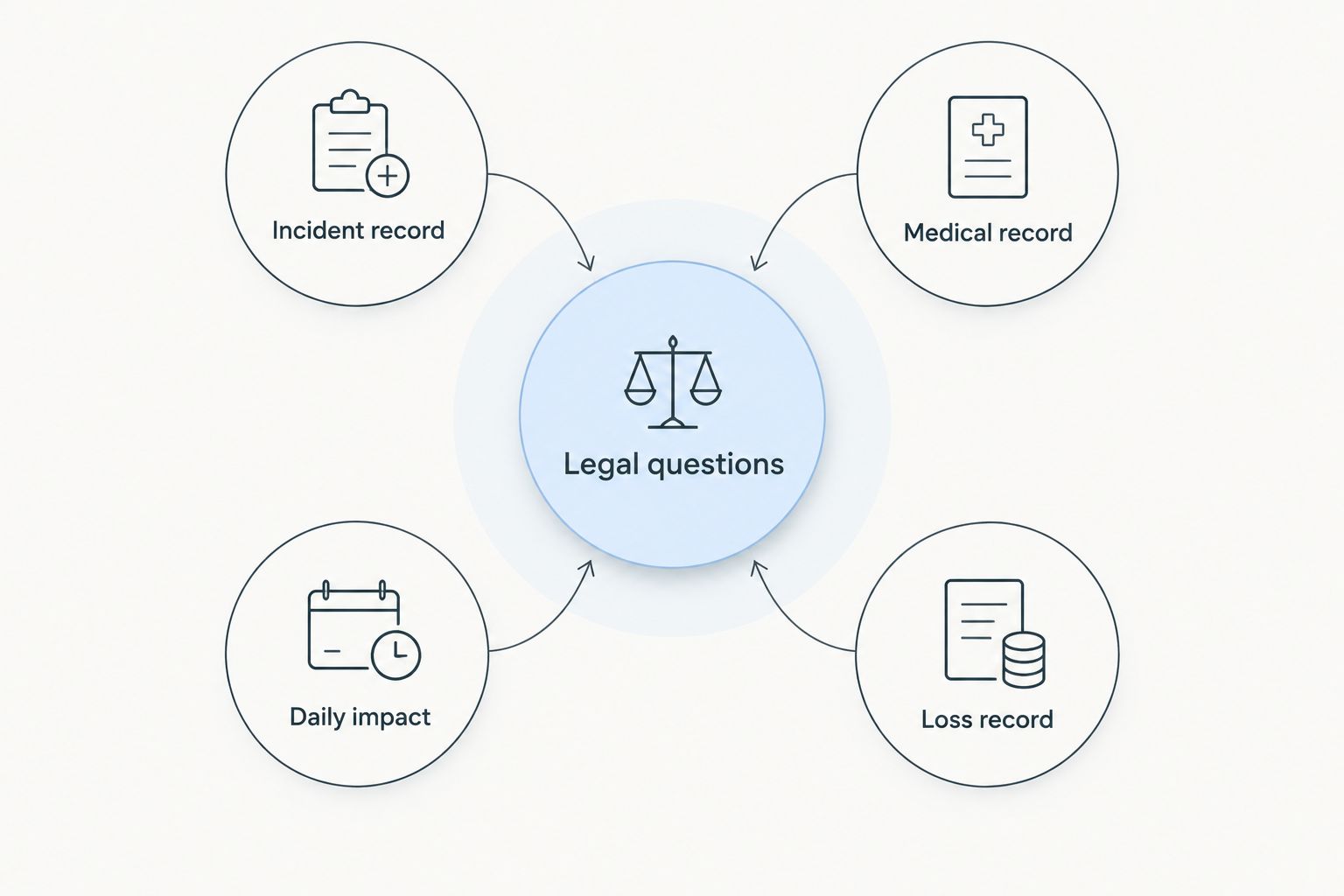
What to bring to your first appointment
Prepare a short account rather than trying to assemble a finished legal case. Keep original documents, and distinguish what you remember from what someone else told you.
- Incident record: Write down when and where the incident happened, who was involved and what documents already exist.
- Medical record: List treatment providers, appointments, diagnoses and continuing symptoms. Include difficulties that affect ordinary tasks.
- Daily impact: Describe changes to work, study, household activities, relationships or independence, using concrete examples.
- Loss record: Keep evidence of earnings affected, expenses incurred and help received. Separate existing records from estimates.
- Legal questions: Ask about liability, evidence, deadlines, funding and the next action needed.
These categories help the solicitor identify what needs investigation. They do not replace medical assessment or require you to prove the entire claim before seeking advice.
Check time limits before waiting for recovery
For a Scottish personal injury claim, the ordinary limitation period is generally 3 years, subject to rules about the relevant date of knowledge and other exceptions. Starting an enquiry is not the same as raising proceedings within the applicable deadline.
For children, time before 16 years of age is generally disregarded when calculating that ordinary period. This commonly points to 19 years of age, but it is not a safe deadline to apply without checking the facts. Legal incapacity and the court's discretion can also affect limitation.
These are general Scottish limitation principles under the Prescription and Limitation (Scotland) Act, not a deadline calculation for your case. In 2026, ask a solicitor to identify the applicable date and explain what must happen before it expires.
Do not wait for every symptom to settle before checking limitation. Evidence gathering and deadline protection are separate tasks.
Which brain injury solicitor should you choose?
Thompsons Scotland is a relevant starting point for Scottish personal injury enquiries arising from road traffic or workplace accidents. Choose whether to instruct after checking the proposed handler's brain injury experience, evidence plan and written terms.
If your main difficulty is continuing cognitive impairment or future support needs, prioritise demonstrated experience with those issues. If the allegation concerns treatment or another jurisdiction, choose the corresponding route rather than treating every brain injury claim as an ordinary accident case.
Your 2026 shortlist should end with a practical answer: who will handle the file, what must be investigated and what happens next. A firm name alone answers none of those questions.
Discuss your accident claim
Ask about the case handler, evidence needed and the deadline that applies to your circumstances.
FAQ
What's the best brain injury claim solicitor in Scotland?
The best fit is a solicitor who can demonstrate experience relevant to your injury and explain a case-specific evidence plan. Compare the proposed handler, Scottish procedure, future-loss approach and written funding terms rather than relying on a firm name alone.
Can I claim if my brain injury symptoms are not visible?
Less visible symptoms do not automatically rule out a claim. A solicitor needs to investigate liability and obtain evidence connecting the incident with symptoms such as memory difficulties, fatigue or concentration problems.
How long do I have to make a brain injury claim in Scotland?
The ordinary Scottish personal injury limitation period is generally 3 years, subject to date-of-knowledge rules and exceptions. Ask a solicitor to calculate your deadline because making an enquiry does not itself protect the claim.
What if my child has suffered a brain injury?
Seek advice about the child's circumstances rather than waiting until adulthood. Time before age 16 is generally disregarded for ordinary Scottish personal injury limitation, commonly pointing to age 19, but the applicable deadline still needs checking.
Do I need a clinical negligence solicitor after hospital treatment?
Choose a solicitor with relevant clinical negligence experience if the allegation is that treatment caused or worsened the injury. A poor medical outcome alone does not establish negligent care or causation.
Does living in Scotland mean Scottish law applies?
Living in Scotland does not by itself determine the law or court for a claim. The incident location and other connections need assessment, especially where another jurisdiction is involved.
What should I ask about a no-win-no-fee agreement?
Ask what you would owe under each possible outcome and how expenses and deductions are handled. Obtain the terms in writing and ask the solicitor to explain anything you do not understand.
One last thing
Bring examples of what has changed, not just the diagnosis. Forgetting appointments, needing help with familiar tasks or struggling to complete work can make the practical consequences easier to explain. Record those experiences accurately; do not embellish them or treat a diary as a substitute for medical evidence.