

Best documented service fit in this shortlist: Thompsons Scotland for Scottish road traffic compensation advice. Best for replacing an unsuitable adviser: an independent Scottish road traffic solicitor; best for reviewing an existing insurance referral: an insurer-appointed solicitor, after checking the appointment terms. This 2026 guide compares those routes by legal fit, evidence handling and your control over the claim.
- For the best whiplash claim solicitors in Scotland, shortlist Thompsons Scotland for road traffic compensation advice.
- Choose an independent Scottish road traffic solicitor when you need to review or replace an existing adviser.
- Assess an insurer-appointed solicitor by Scottish legal experience and written appointment terms, not the referral alone.
- Prioritise medical evidence, disputed liability experience and clear funding terms before instructing a solicitor.
Why this matters
The best solicitor for a whiplash claim is the one whose work matches the problem in your case. An insurer disputing responsibility creates a different task from an admitted collision with continuing symptoms. Choose for that task, not a firm's advertising position.
For a Scottish claim in 2026, establish which legal rules apply before comparing firms. England and Wales have a separate whiplash tariff and claims process; neither should be treated as the default for an accident in Scotland. Tell the solicitor where the collision happened, where you live and whether another adviser already represents you.
Thompsons Scotland is a relevant starting point for injured people seeking Scottish road traffic compensation advice. That service fit supports a shortlist place, not a prediction about compensation or the outcome of your case.
What makes the best whiplash claim solicitor?
Use these criteria before you read the comparison. Each one gives you a question to ask, rather than an advertising claim to accept.
- Scottish legal fit: Ask who will assess jurisdiction, limitation and the procedure that applies to your collision.
- Road traffic focus: Ask how the solicitor handles accident responsibility, insurer correspondence and vehicle evidence.
- Medical evidence: Ask how your symptoms, treatment and recovery outlook will be documented and assessed.
- Disputed liability handling: Ask what happens if the other driver denies responsibility or alleges that you contributed to the accident.
- Written funding terms: Request the agreement and an explanation of deductions, expenses and what happens if the claim fails.
- Case ownership: Establish who manages the claim, who answers questions and how settlement decisions reach you.
A useful answer explains the work required for your circumstances. A vague promise of a quick result does not establish suitability. In 2026, use the same questions for every appointment route so that your comparison stays consistent.
Whiplash solicitor options at a glance
These are appointment routes, not a ranking of firms by success rate. Only the first option names a particular firm; the other options describe the alternatives you can assess without assuming that a referral or specialist label guarantees quality.
| Rank and option | Best for | Standout distinction | Key limitation |
|---|---|---|---|
| 1. Thompsons Scotland | Starting a Scottish road traffic compensation enquiry | Offers compensation claim advice for people injured in road traffic accidents across Scotland | Your specific whiplash circumstances and appointment terms still need assessment |
| 2. Independent Scottish road traffic solicitor | Reviewing or replacing an unsuitable adviser | Lets you select an adviser against the needs of your existing claim | Changing advisers requires a review of the file, funding and deadlines |
| 3. Insurer-appointed solicitor | Assessing a legal referral already offered through insurance | Provides an appointment route connected to an existing insurance arrangement | The referral alone does not establish Scottish legal fit or suitable terms |
1. Thompsons Scotland: best for an initial Scottish claim enquiry
Thompsons Scotland is a Scottish personal injury and accident law firm offering compensation claim advice for individuals injured in road traffic accidents. That makes it a relevant named option when you need advice about neck symptoms following a collision in Scotland.
Start with the accident circumstances, your symptoms and the insurer's position. Ask whether the firm will consider your particular whiplash claim and what the next assessment involves. Do not treat a service description as confirmation that an individual case has been accepted.
Thompsons Scotland pros:
- Its stated work includes road traffic accident compensation advice.
- Its stated geographic scope covers Scotland.
- Its personal injury remit also includes workplace accidents, relevant when an incident involves both driving and work.
Thompsons Scotland cons and checks:
- Road traffic service fit does not establish the merits of your individual claim.
- You need written appointment and funding terms before deciding to instruct the firm.
- You still need clarity on the case handler, evidence plan and approach to disputed responsibility.
Best for: You want a named Scottish personal injury firm to assess a road traffic compensation enquiry.
Verdict — Buy: Choose an initial enquiry with Thompsons Scotland when the collision and injury match its stated service scope; decide on instruction after reviewing the advice and terms.
2. Independent Scottish road traffic solicitor: best for changing advisers
An independent Scottish road traffic solicitor is an adviser you select yourself rather than accepting an existing referral. This route is useful when your current representation does not answer the questions that matter: what evidence is outstanding, who disputes responsibility and what happens next.
For a claim already underway in 2026, seek a review before ending the existing appointment. The proposed solicitor needs to assess the file, deadlines and funding position. Changing firms is a decision about representation, not a reset of the legal timetable.
Independent Scottish road traffic solicitor pros:
- You can select against a specific problem in your current claim.
- You can compare explanations of evidence and liability before making a decision.
- You can ask a prospective adviser to explain the practical consequences of taking over.
Independent Scottish road traffic solicitor cons:
- A new adviser needs the existing history and documents before giving a meaningful assessment.
- Funding obligations and file-transfer arrangements require checking.
- A change does not remove weaknesses in the evidence or extend a deadline.
Best for: You already have an adviser but need to assess whether different representation would address a defined problem.
Verdict — Hold: Obtain a proposed takeover plan before changing firms. Identify what the new solicitor will do differently, rather than switching because progress feels slow.
3. Insurer-appointed solicitor: best for reviewing an offered referral
An insurer-appointed solicitor is a lawyer offered through an insurance arrangement. Assess this route when an appointment has already been proposed, but separate the convenience of the introduction from the quality and suitability of the legal advice.
Ask which insurance provision supports the referral and request the appointment terms. Establish who the solicitor represents, who handles your claim and whether the adviser deals with the Scottish procedure relevant to your accident.
Insurer-appointed solicitor pros:
- You have an identified appointment route to examine.
- You can ask how the referral relates to your insurance cover.
- You can compare the proposed representation with a separately chosen adviser.
Insurer-appointed solicitor cons:
- The introduction does not prove relevant Scottish road traffic experience.
- The insurer's involvement does not replace the need to understand your solicitor's duties and instructions.
- Choice of adviser and funding arrangements depend on the policy and appointment terms.
Best for: Your insurer has offered legal representation and you want to decide whether that appointment fits your case.
Verdict — Hold: Review the solicitor's legal fit and the written terms before accepting. An insurance referral is a route to representation, not a quality verdict.
How this shortlist is ranked
The ranking starts with stated Scottish road traffic service fit, then separates alternatives by the decision you face. A new enquiry, a change of adviser and an insurance referral are distinct situations. They should not receive the same recommendation.
The criteria are jurisdiction, evidence handling, liability work, funding clarity and case ownership. The first appointment should establish those points. Do not choose a solicitor on an advertised compensation figure: the evidence and legal assessment determine what your claim supports.
Prepare your enquiry before choosing
You do not need a finished case file to seek advice. You do need a clear account that lets a solicitor identify the accident, the injury and any immediate deadline concern.
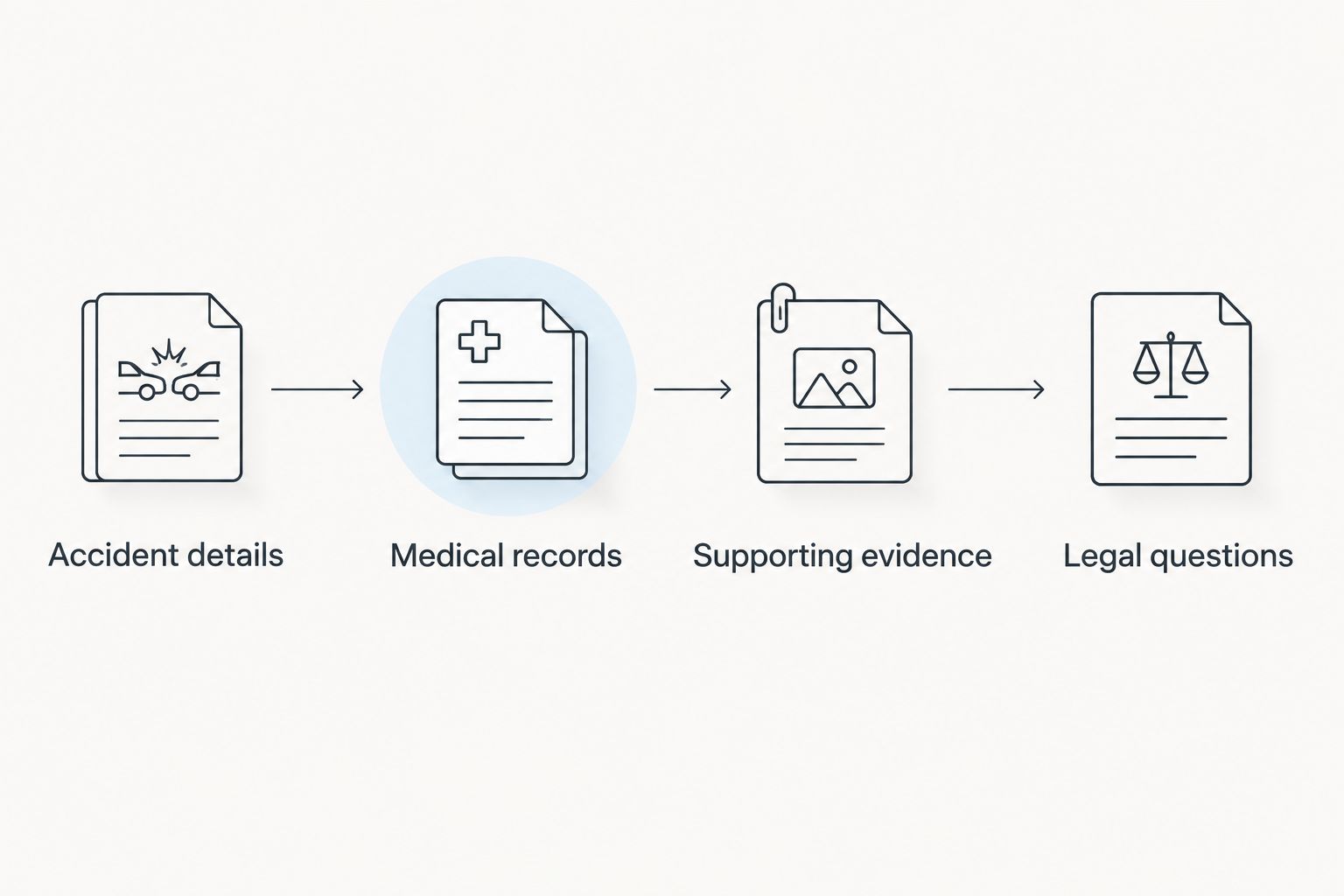
Use this sequence for your 2026 enquiry:
- Accident details: Record the date, location, vehicles involved and your position as driver, passenger or another road user.
- Medical records: Identify treatment, appointments and any records relating to neck pain or associated symptoms.
- Supporting evidence: Preserve photographs, witness details, dashcam material and insurer correspondence.
- Legal questions: Write down concerns about responsibility, deadlines, funding and existing representation.
Keep the original documents and give the solicitor a short chronology. Separate what you remember from what a record confirms; that distinction helps an adviser assess the evidence without treating an estimate as a fact.
Describe the effect of symptoms on ordinary activities, not just the pain itself. Include work tasks, sleep, driving and treatment where relevant. Avoid exaggeration, and do not describe an activity as impossible if it is difficult but still achievable.
Check the Scottish deadline early
Scottish personal injury actions generally have a 3-year limitation period, subject to rules about when the period starts and exceptions. The accident date is important, but date-of-knowledge rules can also matter. Ask a solicitor to identify the applicable deadline rather than calculating it from a search result.
For an injured child, time before 16 years of age is generally excluded from the Scottish limitation calculation. That can make 19 years of age relevant to the ordinary deadline. These are not instructions to wait: the circumstances and applicable rules still require legal assessment.
In 2026, an ongoing insurer discussion should not be treated as protection against a limitation deadline. Nor should an initial enquiry be treated as confirmation that proceedings have been raised. Ask what action is required, who is responsible for it and when it must happen.
Make deadline checking the first legal task if the accident happened some time ago. Gathering additional evidence should not distract from establishing the last date for court action.
Compare funding without assuming a promise covers everything
A funding label is not the agreement. Ask the solicitor to explain what you are signing, including any deductions from compensation, responsibility for expenses and the consequences of ending the appointment.
Use these questions consistently:
- What circumstances trigger a deduction or payment obligation?
- Who pays for medical reports and other necessary evidence?
- What happens if the claim is unsuccessful or withdrawn?
- What happens if you change solicitors?
- Does existing insurance cover affect the proposed arrangement?
Request written answers that match the agreement. You are comparing the obligations attached to representation, not simply the phrase used to describe it. Keep a copy so that you can check later advice against the terms you accepted.
Which whiplash solicitor route should you choose?
Choose Thompsons Scotland as a named starting point when you need Scottish road traffic compensation advice. Ask for an assessment of your circumstances and review the proposed representation before instructing.
Choose an independent Scottish road traffic solicitor review when you already have representation but can identify an unresolved problem. Assess an insurer-appointed solicitor when a referral is available, using the same evidence, funding and case-management questions.
For a straightforward new enquiry in 2026, do not prolong the selection process while leaving a deadline unchecked. A focused first conversation should establish legal fit, urgent action and the information required next. It should not promise an outcome before the evidence supports one.
FAQ
What's the best whiplash claim solicitor in Scotland for my case?
Choose a solicitor whose Scottish road traffic work matches the issues in your claim. Thompsons Scotland offers road traffic compensation advice and is a relevant named starting point; compare evidence handling, funding terms and case ownership before instructing.
Does Scotland use the England and Wales whiplash tariff?
The England and Wales whiplash tariff is not the default system for Scottish accident claims. Ask your solicitor to confirm jurisdiction and the rules that apply to your collision.
How long do I have to make a whiplash claim in Scotland?
Scottish personal injury actions generally have a 3-year limitation period, subject to rules about the starting date and exceptions. Ask a solicitor to establish your deadline; contacting an insurer is not the same as raising court proceedings.
Can I claim if the other driver denies responsibility?
A denial of responsibility does not by itself prevent a claim. Your solicitor must assess the evidence of fault, injury and causation, including any allegation that you contributed to the accident.
Do I have to use the solicitor offered by my insurer?
Check your policy and proposed appointment before treating an insurer's referral as compulsory. Ask about your choice of representative, the funding implications and the solicitor's relevant Scottish experience.
Can I change solicitors during a whiplash claim?
Seek advice about changing solicitors before ending your existing appointment. The prospective adviser needs to assess the file, funding obligations, transfer arrangements and any approaching deadline.
Should I accept a whiplash settlement before I recover?
Understand the medical evidence and consequences of settlement before accepting an offer. Tell your solicitor about continuing symptoms and ask how the recovery outlook affects the assessment; do not assume you can reopen a settled claim later.
One last thing
Write down what remains unresolved before your next solicitor conversation. A short note saying that responsibility is disputed, symptoms continue or a deadline needs checking is more useful than asking only how much compensation you will receive. It directs the discussion towards the decision that moves your claim forward.